
We decode food down to the molecule, so you can innovate at a new level.
Multi-omic food analysis. Comprehensive molecular characterization, quantified and interpreted through curated research. Instead of assumptions, you'll understand how your product works, why it matters, its potential benefits, and see where it can go next.
THE OPPORTUNITYYou can only do more with what you have when you know what you have.
There is more inside what you grow and make than anyone has ever been able to look for. An almond. A protein isolate. A finished bar. A capsule. Every one of them carries compounds that may never have been characterized, because until now there hasn't been a way to see the full molecular picture. Now the tools and processes exist.
Over decades, Pharm to Food has developed the analytical methods needed to characterize the extraordinary molecular complexity of food, from carbohydrates and proteins to peptides, amino acids, lipids, and metabolites. We go far beyond measuring what is present. We define molecular structures, distinguish thousands of individual components, and connect each one to its function through the published science. The result is the molecular story of your product, uncovered with a depth and precision that was previously not possible.
What happens next depends on where you sit. A grower finds out what their crop carries that the commodity price never accounted for. A processor learns why a buyer would choose its ingredient over the next one. A brand finds its next product inside the one it already sells. Companies come in with one question and leave with ten things to explore.

THE DELIVERABLEThe Molecular Story: a complete, quantified view of the molecular composition of your product, ingredient, or formulation.
We work closely with your team to link your product's distinct molecular profile to measurable functional and biological properties. From there, we identify the features that drive its performance, its health benefits, and what sets it apart. You have the evidence to validate claims and refine formulations. What you do with it is where the value compounds. A product your category has not thought of yet. An ingredient buyers ask for by name. And innovation and intellectual property that belongs to you and no one else.
-
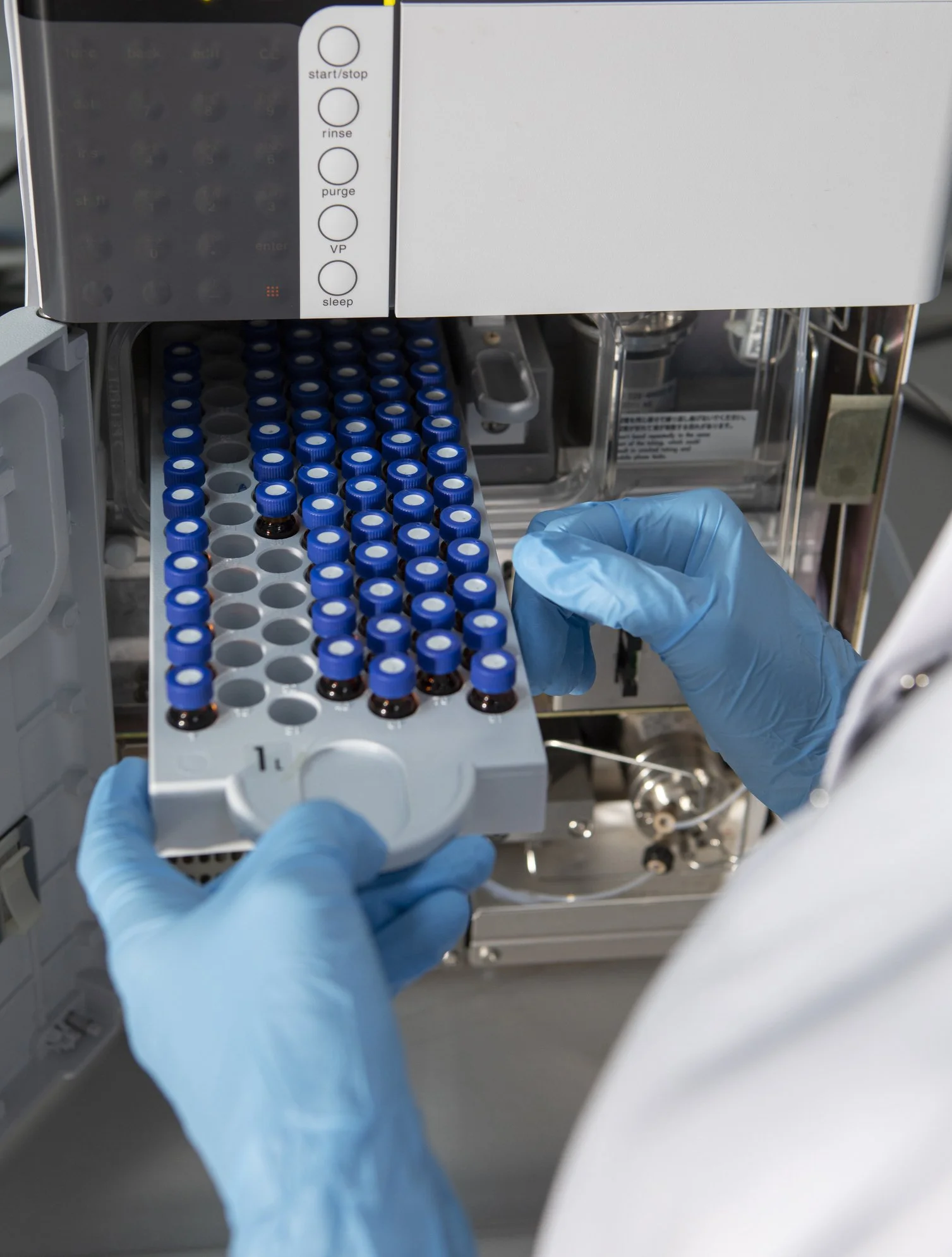
What's in your product, down to the exact quantity. Using LC-MS-based glycomics, proteomics and multi-omics, we identify and measure the molecules in your product: sugars, fibers and complex carbohydrates, proteins and peptides, phenolics, and lipids. That goes well beyond the totals on a nutrition label.
-
What each compound does in the human body. We link your product's molecular profile to functional properties such as prebiotic potential and short-chain fatty acid production, so you can see which components drive the benefits you want to highlight.
-
What that means for your formulation, claims, and roadmap. Our scientists turn the data into clear findings. You'll see how your product compares with benchmarks from our database of 2,000+ foods, what sets it apart, and where to take the formulation next.
-
The published science behind every finding, so what you say holds up. Our methods come from more than 35 years of peer-reviewed glycomics and multi-omics research at UC Davis, and each one is validated before it's used on client samples. You get quantified, reproducible results to support product claims, regulatory filings, investor conversations and marketing, with the scientific rigor that buyers and reviewers expect.

WHO WE SERVEEvery industry has a question only its molecules can answer. Here's how Pharm to Food helps uncover it.

Food & Beverage Companies
“What else can my product do?”
You sell a product that works, but the compounds doing the work were never named. Pharm to Food identifies every compound in your formulation, quantifies it, and connects each one to what the science says it does. Most companies walk in with one idea and walk out with several more. Your competitors can't see these opportunities, because the data comes from a product only you make.

Dietary Supplement Companies
“Can we show why it works?”
Your customer buys your product for what it does for them. Pharm to Food tells you which molecules are producing that benefit, at what concentration, and what the evidence establishes. That's the foundation a substantiation program is built on, and the map of what's worth a clinical study. You stop asking people to believe you. Your label stops being a list of ingredients. It becomes evidence.

Food
Entrepreneurs
“What food can solve this?”
You see a problem nobody is solving and think food could be the answer. What you don't know yet is which ingredients and compounds can get you there. Pharm to Food gives you a molecular starting point instead of a guess: which ingredients actually have the properties you need, and what's already backed by evidence. You don't need an existing formulation to start. You need to know what's possible.

WHY PHARM TO FOODMost providers stop at what’s present. Pharm to Food decodes what your formulation does for the human body at the molecular level. That’s only possible with the complete picture: what's there, how much, what it does, and why.
Structure and Bioactivity. Both.
Most providers tell you whether a compound is present. Pharm to Food combines molecular characterization and precise quantitation with bioactivity, giving you both the composition of your material and a deeper understanding of its function.
Bespoke, not Benchmarked.
Standardized testing can tell you how a material compares to a reference. We characterize your specific formulation, using LC-MS (liquid chromatography–mass spectrometry) methods developed in Carlito Lebrilla's lab to define its molecular profile.
From Data to Discovery.
Molecular data is only the beginning. We combine chemistry, informatics, and scientific expertise to help interpret complex datasets and identify meaningful connections between molecular composition, function, and health.
The Data Your Models Are Missing.
AI and computational tools are only as useful as the data behind them. Our glycomic, proteomic, and metabolomic datasets are built to support informatics, modeling, and new ways of understanding food and health.


THE PROOF20+ projects across different industries.
A global category leader spent fifteen years building its marketing, its clinical program, and its innovation roadmap around one bioactive compound. Everyone understood that compound to sit in the carbohydrate fraction of the product. In reality, it sat in the protein fraction. Now, that company holds the accurate picture. Every competitor still with the old assumption is copying the wrong thing. This company pushed itself into a new category and is thriving.
THE SCIENCE & THE PEOPLEFood’s Sequencing Moment.
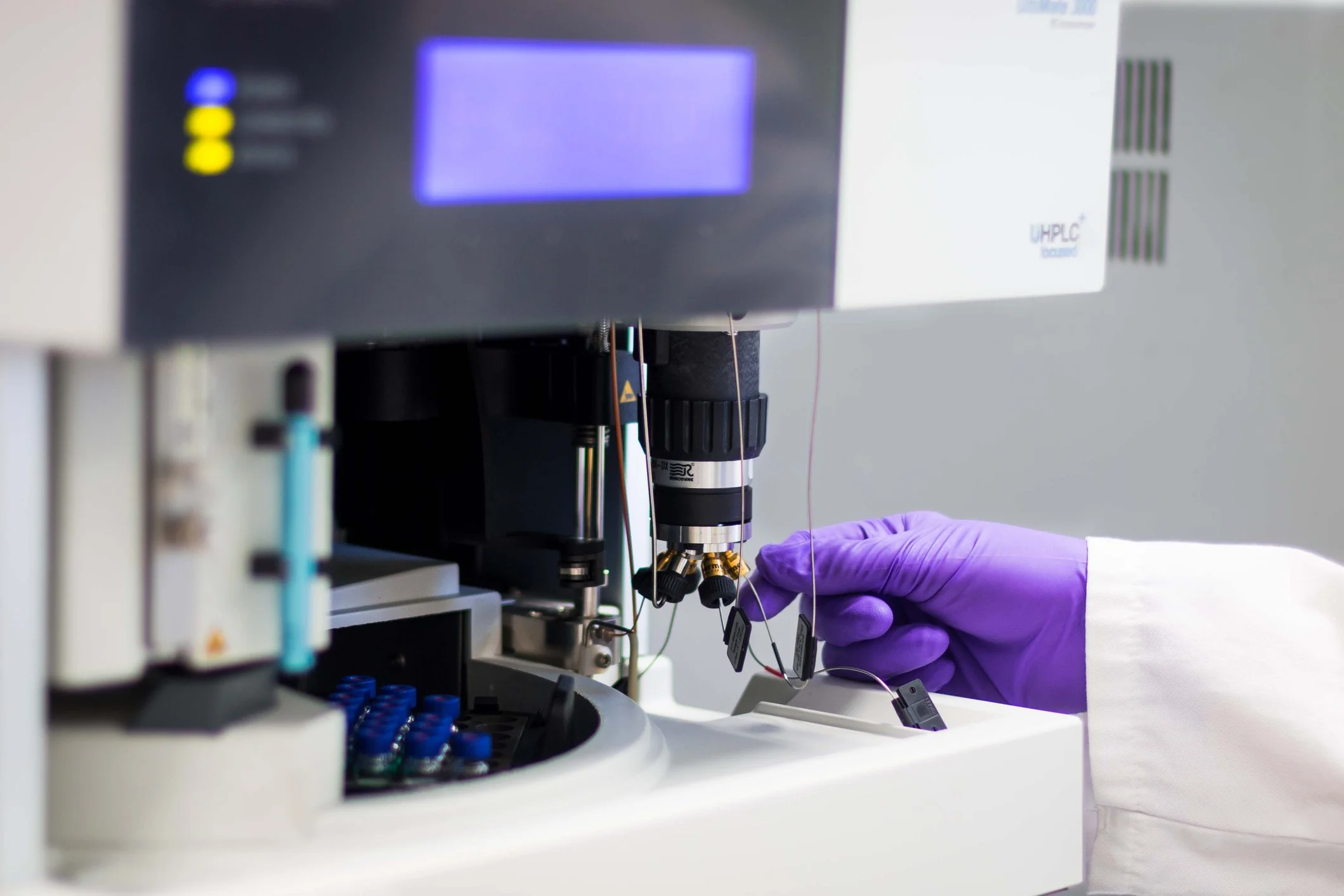
Every molecule has its own personality, defined by its structure, its chemistry, and the way it interacts with the molecules around it. Carbohydrates show this especially well, spanning a vast range of distinct structures, each with its own biological activity. Proteins, peptides, and free amino acids are just as varied. Together, those personalities determine what a food does.
Reading them is a problem on the scale of sequencing DNA. Carlito Lebrilla, one of the world's leading analytical chemists working in food and nutrition, pioneered the work. Characterizing a single polysaccharide used to take months. His methods do it in days. Pharm to Food exists to put that to work for better food. The methods are published, but the pipeline they feed has not been assembled anywhere else, including inside the world's largest food companies.
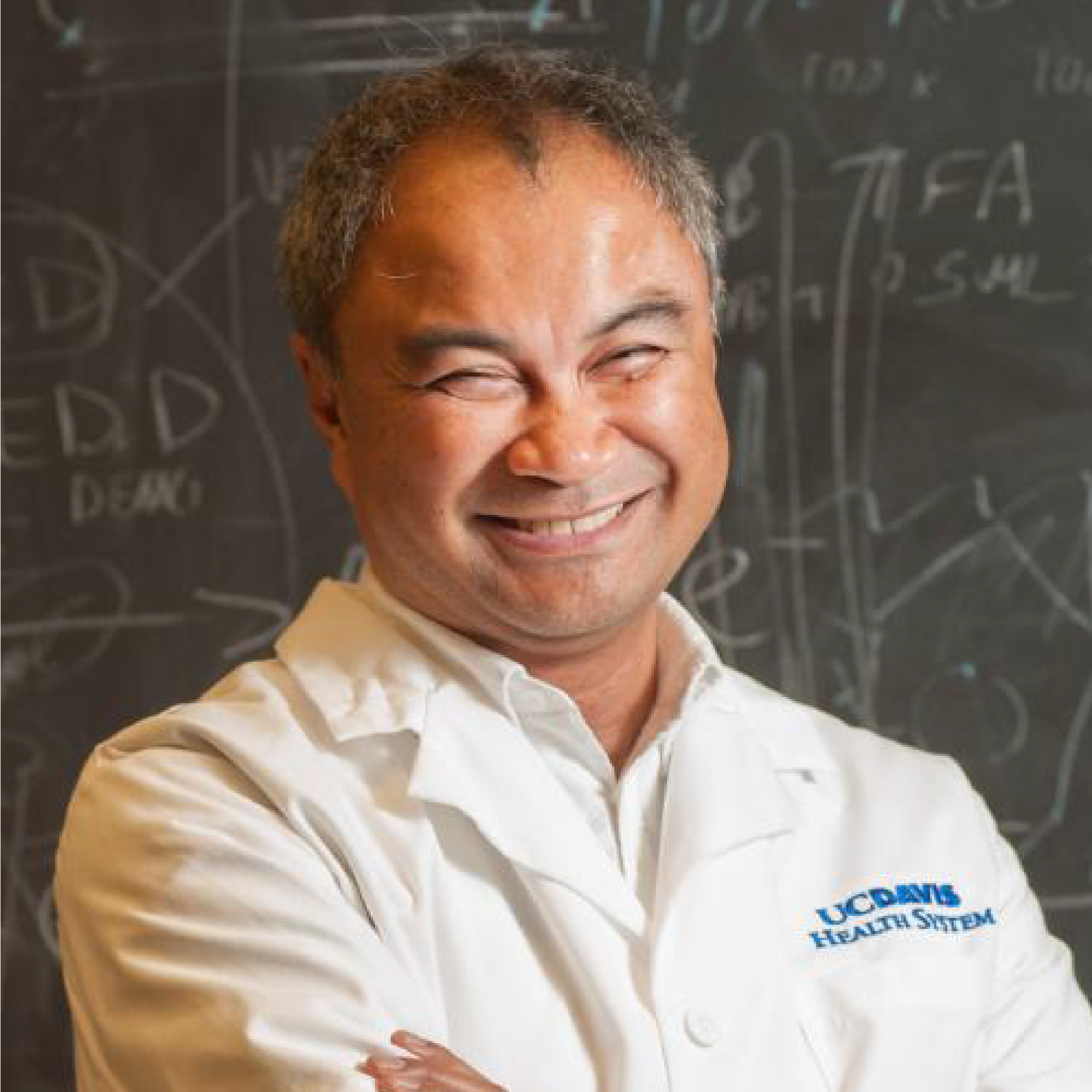
Carlito B. Lebrilla, PhD
Analytical Chemist
Distinguished Professor, UC Davis Chemistry & Chemical Biology
President, American Society for Mass Spectrometry
-
Dr. Lebrilla is a Distinguished Professor at the University of California, Davis in the Department of Chemistry & Biochemistry and in Molecular Medicine at its School of Medicine. He received his PhD from the University of California, Berkeley and was the Alexander von Humboldt Fellow and NSF/NATO Fellow at the Technical University in Berlin.
His research focuses on developing bioanalytical methods based on mass spectrometry with the goals of structurally characterizing bioactives in food and determining its relationships to health and diseases. He has created techniques for the characterization of milk bio actives, specifically mammalian milk oligosaccharides.

Founding Partner, The March Group
Senior Scholar, GSM, UC Davis Former CSO, Mars Inc.
Harold Schmitz, PhD
-
Dr. Harold Schmitz is a seasoned venture builder with unique global experience at the interface between research universities and the food, health, and climate technology sectors.
Dr. Schmitz holds a PhD in Food Science from North Carolina State University, MS in Food Science from University of Illinois Urbana-Champaign, and a BS in Food Science from the University of Arkansas. He is a founding partner of The March Group, Senior Scholar at UC Davis, and former CSO of Mars.
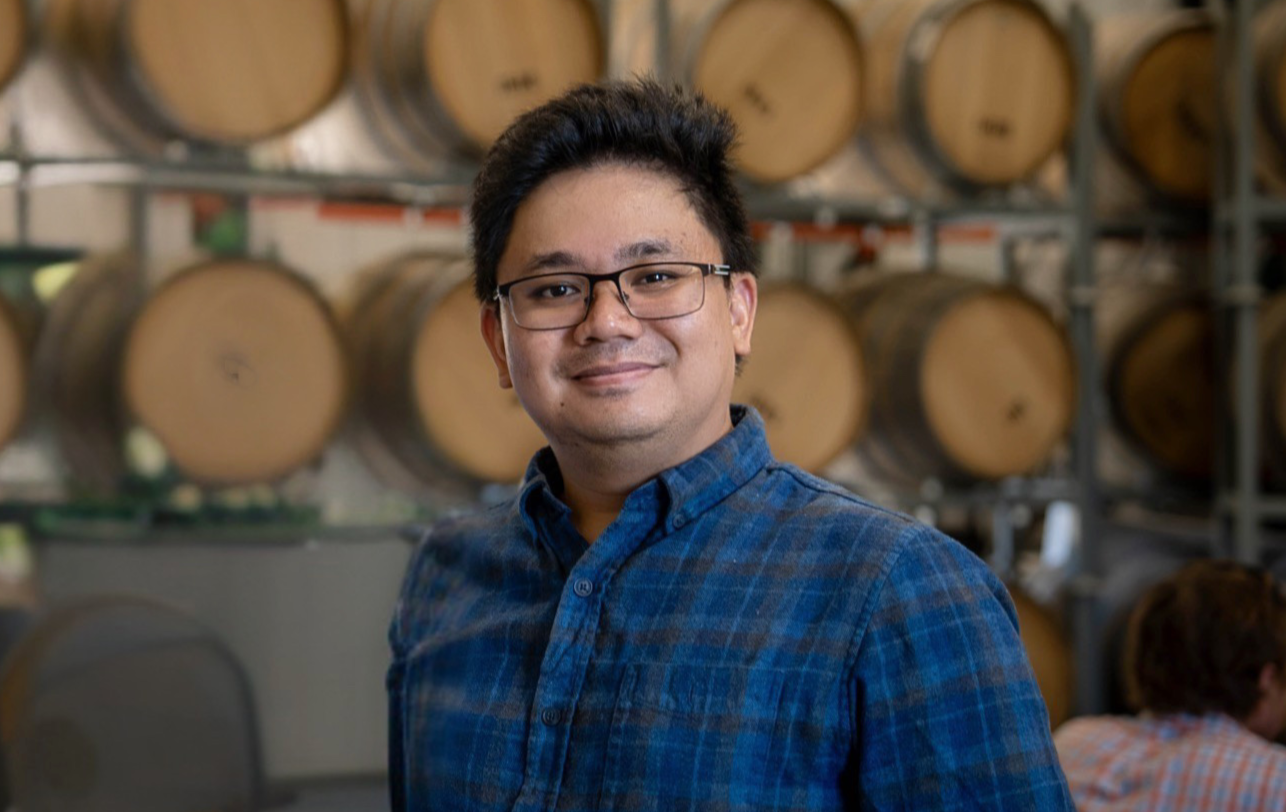
Michael Russelle Alvarez, PhD
PhD Chemistry & Chemical Biology Innovator Fellow, IIFH, The March Group
-
Russelle is a postdoctoral researcher at the University of California, Davis. He earned his PhD in Chemistry & Chemical Biology at UC Davis under the mentorship of Prof. Carlito B. Lebrilla, where he developed bioanalytical methods to characterize protein glycosylation pathways and investigate their implications in diseases such as cancer and Alzheimer’s. He was also an Innovator Fellow at The March Group and the UC Davis Institute for Food and Health.
Leveraging his cross-disciplinary training in science and entrepreneurship, Russelle co-founded Pharm to Food, a bioanalytical research company providing analytical chemistry expertise and advanced measurement capabilities to startups and companies in the biotech, foodtech, and agtech sectors

Legal Advisor
President, Life Science Strategies Former Gen. Counsel, Martek Biosciences, Mars Veterinary Health
David Feitel, Esq.
-
Dave received both his undergraduate and law degrees from Duke University. In addition to a diverse set of private clients, David currently serves as a Network Advisor to Maryland’s Technology Development Corporation (TEDCO) and as an advisor to Johns Hopkins Technology Ventures.
Through a combination of experiences as a litigator, General Counsel and EVP of Martek, and General Counsel of three business segments of Mars, Incorporated, Dave has gained a unique perspective on life sciences and food and nutrition, which has proven invaluable to clients seeking to accelerate their development and commercialization efforts.
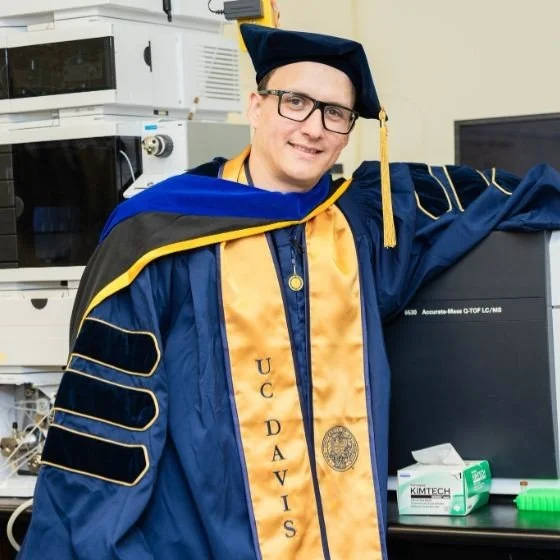
Aaron Stacy, PhD
Automations & Instrumentation Scientist

WHY THIS MATTERSPharm to Food figures out what food is good for, and why. The more we know about what is in food, the further we can all go.
Food is chemically complex, and most of that complexity has never been measured. Pharm to Food is building a more complete molecular picture of food, one ingredient and formulation at a time. For the companies we work with, that molecular intelligence means moving faster and protecting what makes their products distinctive. Beyond any one company, it is how a parent learns what a food is actually doing for their child, how a grower sees what sets a crop apart, how a formulator builds the next product knowing exactly what made the last one work, and how the food industry stops guessing.

OUR TECHNOLOGYThe analytical methods, measurement capabilities, and informatics that allow us to characterize molecular composition, quantify compounds, and connect molecular data with bioactivity.
-
Comprehensive database detailing the dietary fiber composition of over 2,500 foods, offering an in-depth resource for exploring dietary glycans and their roles in nutrition and health.
-
AI-driven search engine designed to predict the biological activities of carbohydrates by integrating machine learning with glycoinformatics, facilitating the discovery of glycan functions in health, nutrition, and disease contexts.
-
Complete identification and quantification of protein, peptide, and amino acid signatures in food matrices.
-
Quantification of milk oligosaccharides in human (HMO), bovine (BMO), and other milk matrices to uncover their health benefits, including roles in gut health, immunity, and microbial modulation.
-
Complete quantification of lipids, including long-chain and short-chain fatty acids, in food and biological sample matrices.
-
Quantification of glycomic, proteomic, and metabolomic biomarker signatures, including key metabolites, for clinical studies.
-
Complete glycomic and proteomic characterization of bioactive fibers, glycoproteins, and unique protein products in biological samples.
Start the Conversation
Have a product, ingredient, or question you want to explore? Let's talk about what molecular analysis can uncover for you.